Welcome to Souk El Had in Agadir, Africa's largest covered market and a true beating heart of Morocco. Beyond its bustling stalls of spices and flavors, Souk El Had is a sanctuary of traditional Moroccan craftsmanship, a place where the past meets the present through the skilled hands of its artisans. Here, every object tells a story, every color vibrates with an ancestral tradition. Whether you are looking for a unique souvenir, a piece of art, or simply an immersion in local culture, the alleys of Souk El Had will reveal a world of incomparable expertise, from the colorful pottery of Safi to dazzling Berber jewelry, refined leather goods, and iconic babouches. Prepare for a sensory journey into the heart of Moroccan authenticity.
Treasures of Earth and Leather: Pottery, Leather Goods, and Babouches
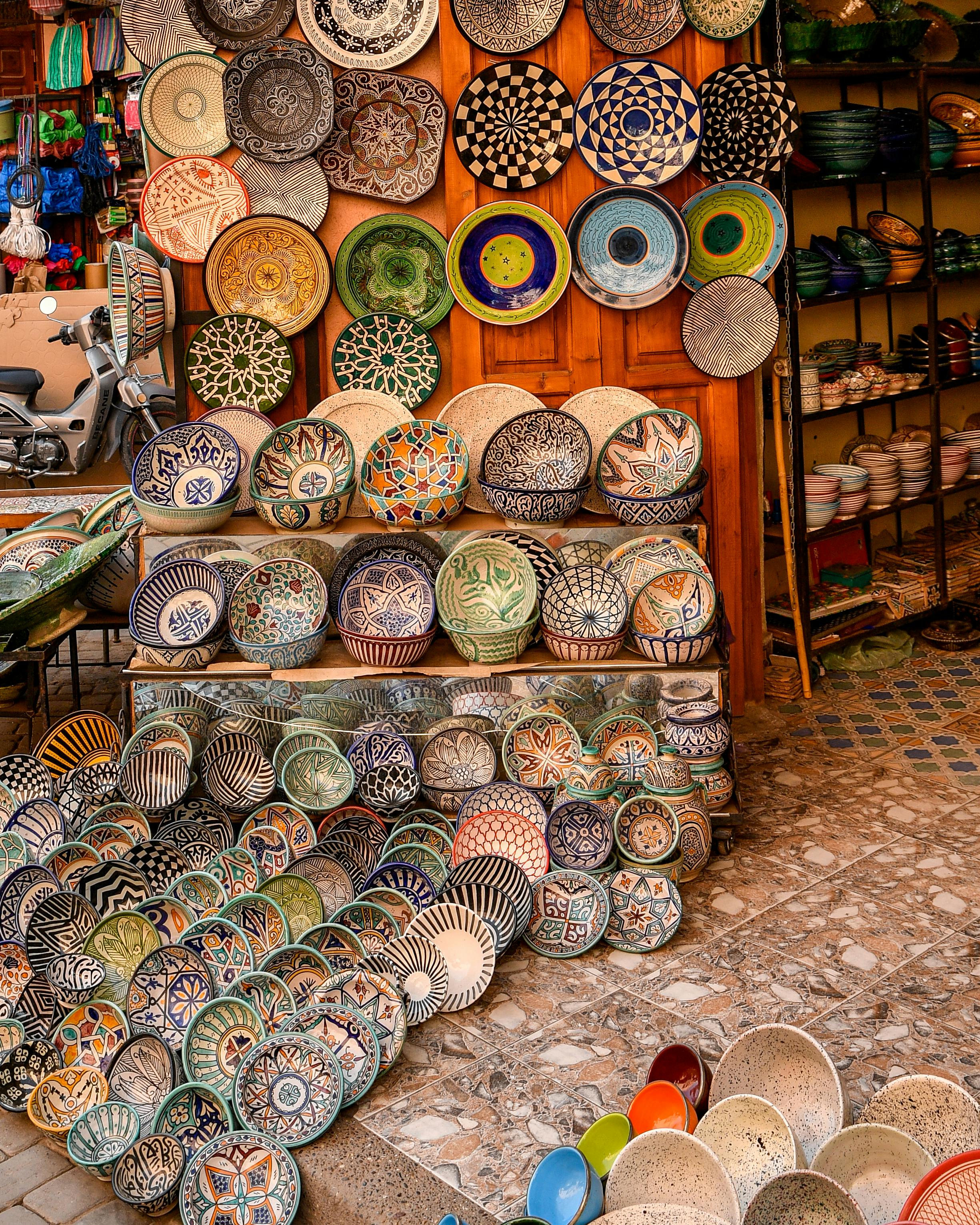
Craftsmanship at Souk El Had is a celebration of material transformed by human hands. Safi pottery, for example, is a must-see. Renowned for its complex patterns and vibrant colors, it adds a touch of sparkle to your interior. You will find tagines, decorative dishes, and tea sets, each testifying to a technique passed down from generation to generation. Clay, shaped with love, becomes a functional work of art, reflecting the richness of Moroccan culture.
Not far from there, the leather goods stalls catch the eye. Moroccan leather is famous for its suppleness and durability. Handbags, wallets, belts, poufs, and even decorative objects are crafted with remarkable precision. Leathers are often naturally dyed, offering a palette of earthy and deep colors. Each piece is unique, imbued with the meticulous work of the artisan, making the purchase of a leather item a true acquisition of quality and style.
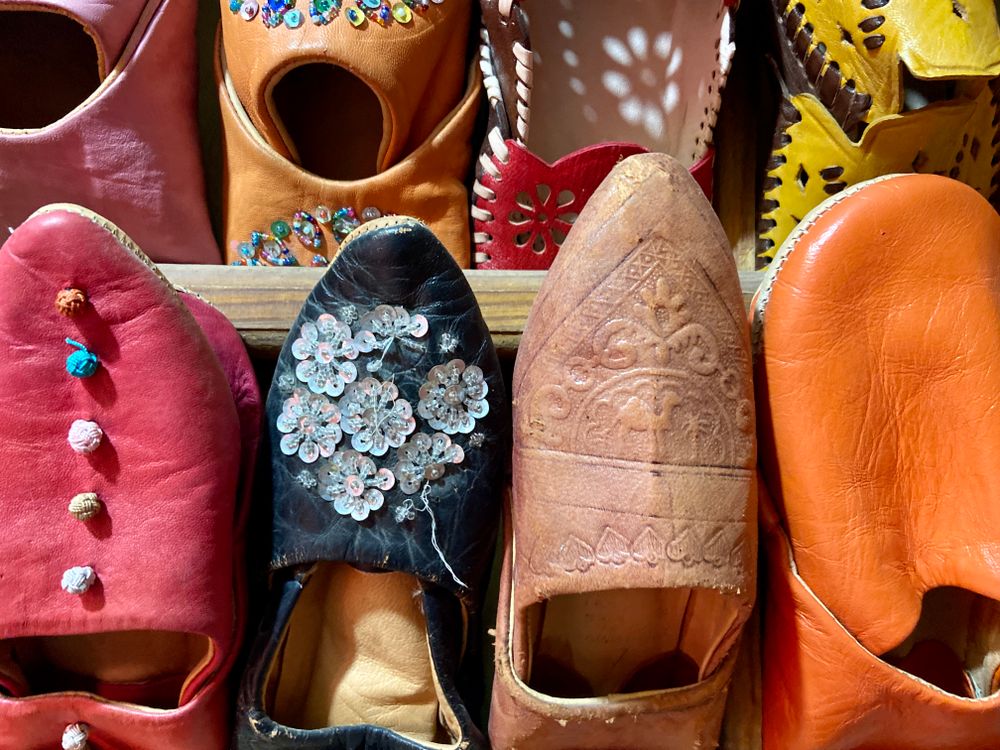
And of course, how can we talk about Moroccan craftsmanship without mentioning babouches? These traditional, soft, and comfortable shoes are an emblem of Morocco. Available in a multitude of colors, materials (leather, suede, embroidered fabric), and styles, they are perfect for home or for a casual yet stylish outfit. The artisans of Souk El Had make it a point of honor to preserve this ancestral know-how, offering hand-stitched babouches, a guarantee of quality and authenticity.
The Splendor of Traditions: Berber Jewelry and Exquisite Embroidery
Souk El Had also abounds with glittering treasures, notably Berber jewelry. These silver adornments, often decorated with colorful enamels, coral, or semi-precious stones, are much more than simple accessories. They tell the story of Berber tribes, their symbols, beliefs, and identity. Each necklace, each bracelet, each fibula is a miniature work of art, carrying centuries of cultural heritage. Silver, finely worked, reveals geometric and floral patterns of mesmerizing beauty. Buying a Berber jewel at Souk El Had means acquiring a fragment of history and a testament to exceptional craftsmanship.
Moroccan embroidery is another art form that amazes with its delicacy. On textiles, cushions, tablecloths, or traditional clothing, hand-embroidered motifs are of remarkable complexity and finesse. Each stitch is placed with patience and precision, transforming a simple fabric into an exceptional piece. Vibrant colors or gold and silver threads add a touch of luxury and elegance. These embroidered pieces reflect a tradition deeply rooted in Moroccan culture, an art that requires time, dexterity, and unwavering passion.
At the Heart of Know-How: Encounters and Buying Tips
What makes the craftsmanship experience at Souk El Had so unique is the opportunity to meet the artisans themselves. In the bustling alleys, you will sometimes come across masters at work, shaping clay, chiseling silver, or assembling leather. These privileged moments offer a glimpse into the dedication and passion that drive these guardians of traditions. Do not hesitate to strike up a conversation; many are proud to share the history of their art and their ancestral techniques. It is this transmission of know-how, often from father to son or mother to daughter, that ensures the longevity of these art trades in Morocco.
To make the best purchases at Souk El Had in Agadir, here are some tips from your local expert guide. First, take your time to stroll and compare. The offer is vast, and each shop has its specificities. Then, negotiation is an integral part of the Souk experience. Approach it with a smile and an open mind; it is a friendly and respectful tradition. Finally, always prioritize authenticity. Ask questions about the origin of the materials and the manufacturing method. A true artisan will always be transparent and proud to show you the quality of their work. Supporting these artisans means contributing to the preservation of an invaluable cultural heritage.
Souk El Had in Agadir is much more than just a market; it is a living museum of Moroccan craftsmanship. From Safi pottery to colorful babouches, from Berber jewelry to delicate embroidery, each item is a testament to the talent and cultural richness of Morocco. Come lose yourself in this enchanted labyrinth, let yourself be seduced by the beauty of the creations and the warmth of the encounters. The craftsmanship of Souk El Had offers you a window into the authentic soul of Agadir and a unique opportunity to take a piece of this magic with you. A visit to Souk El Had is an unforgettable experience, a true hymn to ancestral Moroccan know-how.